what does it feel like to be dilated
Most of the time, the cervix is a small, tightly closed hole. It prevents annihilation from getting into or out of the uterus, which helps to protect the baby.
During labor, intense contractions of the uterus help move the baby down and eventually out of the pelvis, and into the vagina. These contractions put pressure on the cervix and crusade it to expand slowly. Contractions tend to become stronger, closer together, and more regular as labor progresses.
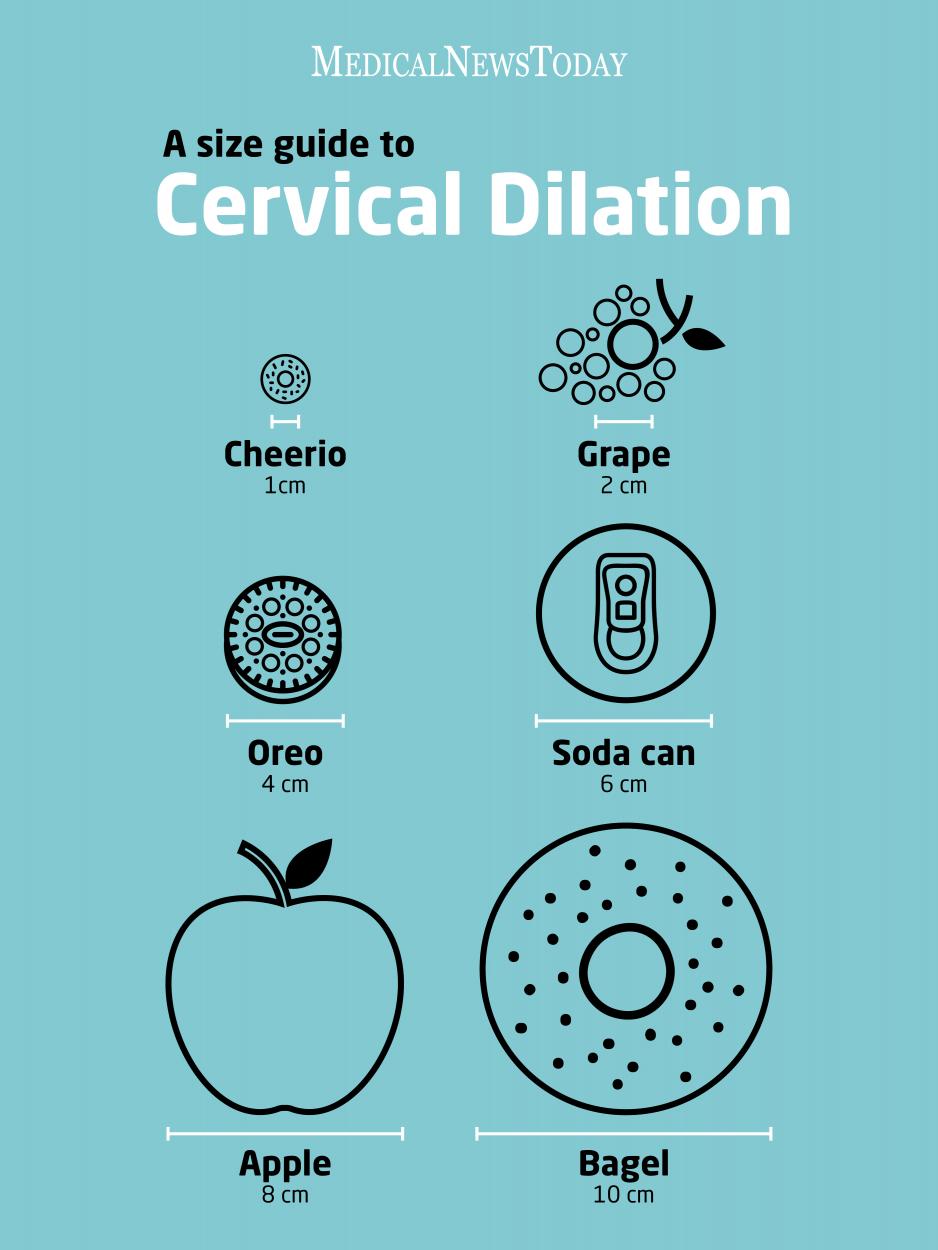
Most medical guides carve up labor into three stages:
- Phase one: early, active, and transition labor. Contractions begin, the cervix dilates, and the baby moves downward in the pelvis. Stage one is complete when the cervix has dilated to ten centimeters (cm).
- Stage 2: The trunk begins pushing out the babe. During this phase, women frequently experience a strong urge to push. This stage ends with the nascency of the baby.
- Stage three: Contractions push button out the placenta. This stage ends with the commitment of the placenta, ordinarily within a few minutes after the nascence of the baby.
Yet, many women in labor may feel that they are experiencing many more stages than this.
Stage one: early labor
In the early stages of labor, the cervix dilates to the following sizes:
- i cm, nigh the size of a cheerio
- 2 cm, the size of a pocket-size to medium-sized grape
- three cm, the size of a quarter
Belatedly in pregnancy, the cervix may have already dilated several centimeters before a woman experiences any symptoms of labor.
Some women, particularly those who are giving nascence for the offset time, take difficulty telling whether labor has begun. This is because contractions in early labor are oft mild and irregular, growing steadily more intense equally the labor progresses and the cervix dilates.
This increase in intensity may take just a few hours or tin take many days. Knowing whether this is bodily labor can assistance people to set.
During true labor, a person's contractions:
- are not merely on i side of the body
- brainstorm at the top of the uterus, and feel like they are pushing downward
- get more than intense and regular with time
- do not end with balance or taking a warm shower
Some women may do good from resting or eating a snack at this phase to ensure they have enough energy for the more tiring stages ahead.
Stage 1: active labor
During the agile stage of labor, the cervix dilates to the post-obit sizes:
- 4 cm, the size of a small cookie, such as an Oreo
- 5 cm, the size of a mandarin orange
- vi cm, the size of a small avocado or the superlative of a soda can
- 7 cm, the size of a tomato
Labor contractions become more than intense and regular during active labor. Many women find that the main characteristic of active labor is that the contractions are extremely painful rather than uncomfortable.
At this stage of labor, some women may choose medication, such as an epidural to cope with the pain. Others prefer to manage the pain naturally. Changing positions, moving, and remaining hydrated tin help with the hurting of active labor.
Stage one: transition stage
During the transition stage of labor, the cervix dilates to the following sizes:
- viii cm, the size of an apple tree
- 9 cm, the size of a donut
- 10 cm, the size of a large bagel
For many women, transition is the most challenging stage. However, it is as well the shortest. Some people begin feeling an urge to push during the transition stage. It is also common to feel overwhelmed, hopeless, or unable to cope with the hurting. Some women vomit.
Some women find that the coping strategies that worked well in the earlier stages of labor are no longer useful. Transition tends to be curt and is a sign that the infant volition soon make it. Moving, changing positions, and visualization exercises can aid.
The cervix continues dilating during transition, and transition ends when the cervix has fully dilated.
Phase two: full dilation and pushing
One time the neck has reached ten cm, it is time to push button the baby out. Contractions go along but also produce a potent urge to push button. This urge might feel like an intense need to accept a bowel movement.
This stage can last anywhere from a few minutes to a few hours. It is often longer for those giving birth for the starting time time.
Historically, doctors told women to push according to a schedule, to count to 10, and to remain on their backs. Today, the advice is very dissimilar, and inquiry says information technology is safe for women to push button co-ordinate to their torso's cues and for as long as feels comfy.
Pushing from a standing or squatting position may also assist speed things along. Assuasive people to push from a range of positions gives the medical staff better access to the woman and babe should they need to assistance with the commitment for any reason.
As a woman delivers the baby, she may feel an intense burning and stretching as her vagina and perineum stretch to accommodate the baby. This sensation typically lasts simply a few minutes, though some women tear during this procedure.
Stage three: after the birth
A few minutes later on the birth, a woman may experience weaker contractions. After a wrinkle or two, the body should expel the placenta.
If the body does not entirely expel the placenta, a doctor or midwife may have to assist evangelize it. Sometimes, they will give a adult female an injection of synthetic oxytocin to speed upward delivery and prevent excessive bleeding.
Shortly subsequently commitment, the cervix begins contracting back downwardly to its previous size. This process can have several days to several weeks.
Every bit the uterus and cervix shrink, many women will feel some contractions. Virtually women drain for several weeks after giving birth.
Labor is unlike for each woman. It typically lasts longer with a first birth, merely the length and type of labor vary greatly between individuals.
Some people experience labor that consists of a weaker type of contraction for days or weeks before giving birth. Others give birth in a affair of minutes, while some labors accept days. Most fall somewhere in the centre.
Labor often starts slowly, becoming progressively more intense. It may also start and stop, or tedious during moments of stress or intrusion.
Visualizing the cervix expanding might help some people understand the source of labor hurting, offering a sense of control and deeper insight into the processes of labor.
Source: https://www.medicalnewstoday.com/articles/322615
0 Response to "what does it feel like to be dilated"
Post a Comment